
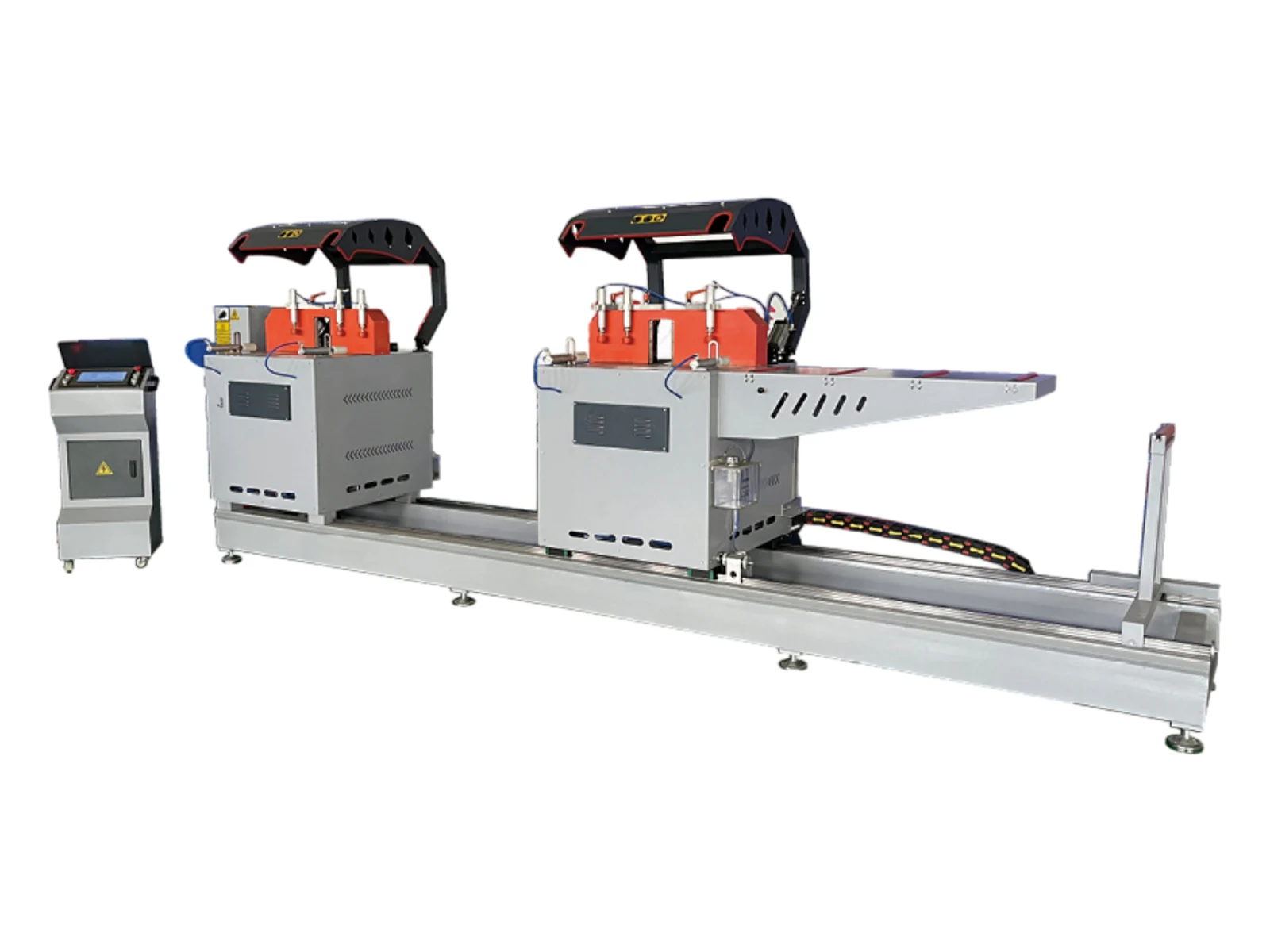
A practical guide to choosing cutting, end-milling and CNC drilling-and-milling equipment for a small thermal break aluminium system-window workshop.
Build a machine package around the work you actually produce
There is no single machinery list that suits every thermal break aluminium system-window workshop. A sound purchasing plan begins with the project volume you expect to complete, the profiles and window systems you will process, the size of your workshop, the operators available and the budget you can invest. These details determine which processes need dedicated capacity now and which can be added as your order volume grows.
The double-head saw is the starting point for frame, sash and mullion cutting. A double-cut or double-head configuration can be selected with fixed 45° cutting for dedicated mitre work, or with angle adjustment where straight cuts, 45° cuts and other angles are part of the production mix. Blade sizes such as 450 mm, 500 mm and 550 mm are options, but the correct size and cutting range must be confirmed against the actual profile section, cutting list, minimum short part and maximum long part.
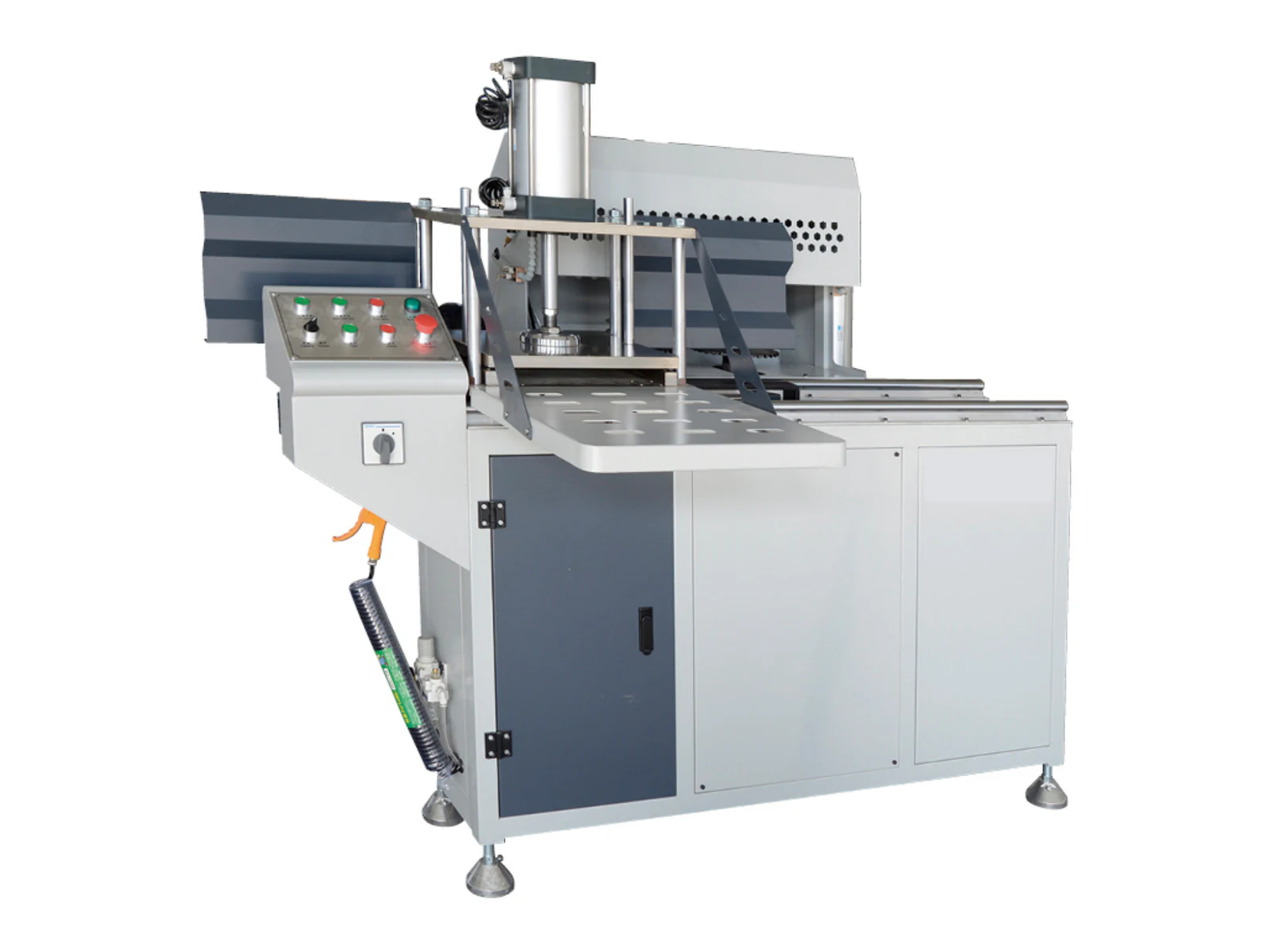
End milling prepares the ends of mullions and transoms so that intermediate profiles meet the frame accurately. Configuration labels such as 3+1, 5+2 and 5+4 describe the spindle and cutter arrangement. A compact 3+1 layout can make aluminium-chip clearing easier. A 5+2 arrangement uses two spindle motors with two cutters, while a 5+4 arrangement uses two spindle motors with four cutters. Choose the arrangement from the end-face geometry and cutter coverage your profile system requires, then validate it with a sample profile before purchase.
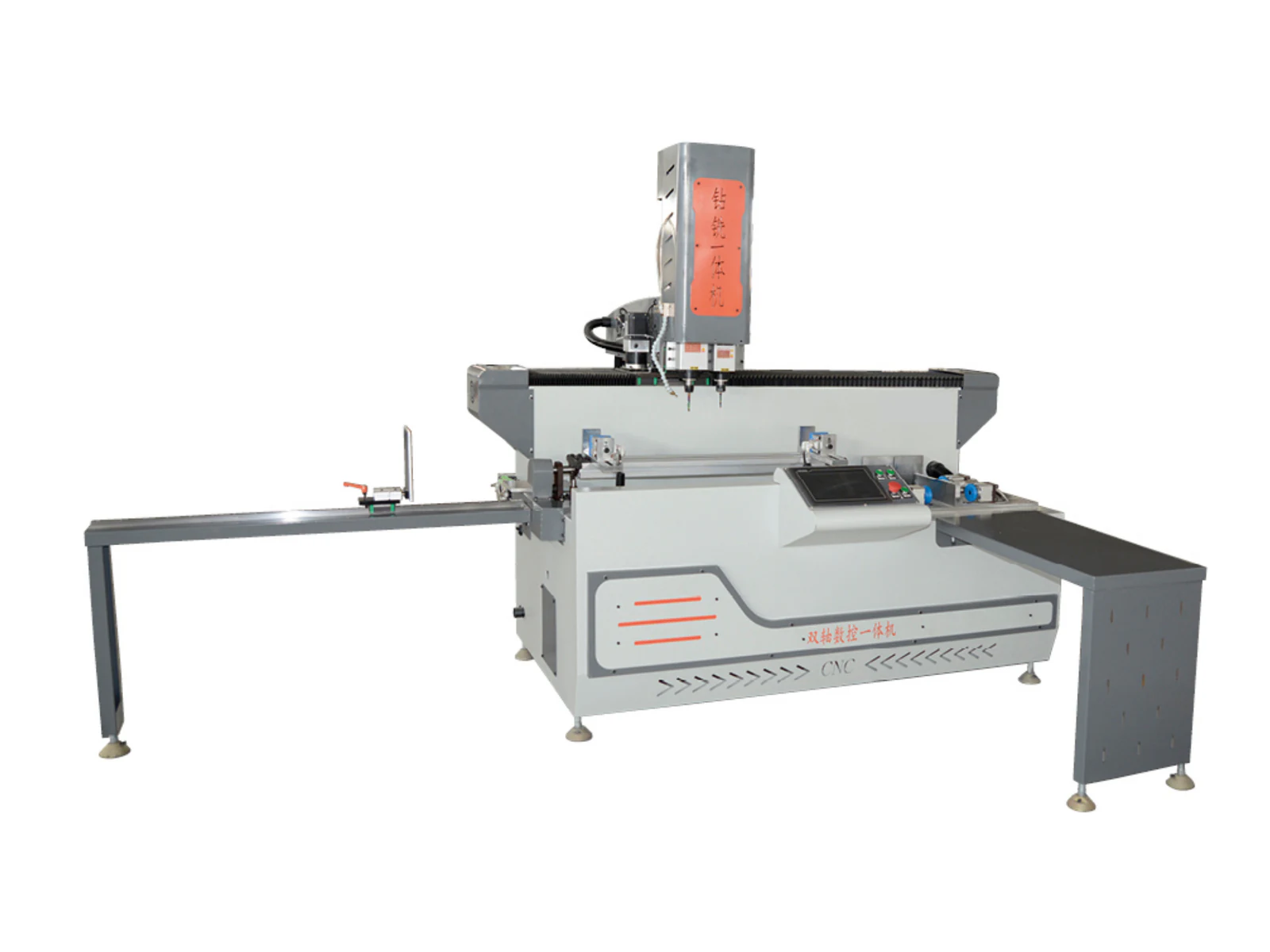
A CNC drilling-and-milling machine combines repeatable drilling, routing and lock-related processing in one station. It can be configured to make corner-connector holes, pin holes and glue-injection holes on one side, while a rotating worktable can support lock and hardware machining on three accessible profile faces. This removes repeated manual marking from the process and helps keep hardware operations consistent, provided that the clamps, tools, working range and programs are matched to the intended profile system.
Before ordering, provide your supplier with representative profile drawings or physical samples, your cutting list, target daily output, factory floor plan, available power and compressed air, and the operations you intend to complete in-house. A sample-machining trial is the most reliable way to check cutting capacity, end-milling coverage and CNC access before committing to a final configuration.
Core machines and how to choose them
Machine 1
Double-Head Aluminium Profile Cutting Saw
450 mm, 500 mm or 550 mm blade class
Choose a fixed-angle saw for repeat 45° mitre work or an angle-adjustable model when straight cuts and variable-angle cutting are part of the job mix. Confirm the profile section, cutting-length range and saw-blade capacity with actual drawings before selection.
- Frame, sash and mullion profile cutting
- Fixed 45° mitre cutting
- Straight and variable-angle cuts where required
Machine 2
Aluminium Profile End Milling Machine
3+1, 5+2 or 5+4 configuration
End milling shapes mullion and transom ends for accurate frame assembly. The proper spindle-and-cutter configuration depends on the profile geometry, required cutter coverage and the desired balance of capacity, changeover and chip-clearing convenience.
- Mullion and transom end-face processing
- System-profile fitting preparation
- Configuration selection from sample profiles
Machine 3
CNC Drilling and Milling Machine
TM-CNC-1750
A CNC drilling-and-milling centre can process corner-connector, pin and glue-injection holes, plus lock and hardware openings. A rotating table supports multi-face machining in one clamping within the confirmed machine working range.
- Corner-connector, pin and glue-injection holes
- Lock and hardware opening machining
- Multi-face drilling and milling in one clamping
Frequently asked questions
What are the three core machines for a small thermal break aluminium window workshop?
A practical starting set is a double-head profile cutting saw, an aluminium end milling machine and a CNC drilling-and-milling machine. Add corner crimping, corner-connector cutting and dedicated punching equipment according to the window system and the operations you need to keep in-house.
Should I buy a 450 mm, 500 mm or 550 mm double-head saw?
Choose the blade size and cutting range from the real aluminium profile section, required angles, smallest and longest parts, material thickness and expected output. A larger blade is not automatically the better choice if its cutting range, tooling and footprint do not suit the work you produce.
What is the difference between 3+1, 5+2 and 5+4 end milling configurations?
They identify different spindle-and-cutter arrangements. A compact 3+1 configuration is designed for simpler chip clearing. A 5+2 configuration uses two spindle motors and two cutters, while a 5+4 configuration uses two spindle motors and four cutters. Select the arrangement that fully covers the profile end-face geometry you need to machine.
What can a CNC drilling-and-milling machine process on aluminium window profiles?
It can make corner-connector, pin and glue-injection holes, as well as lock and hardware openings. On machines with a rotating table, multiple accessible faces can be machined in one clamping, subject to the machine working range, clamping and programmed operation.
What should I prepare before asking for an aluminium window machinery proposal?
Provide profile drawings or samples, window and door types, cutting-list dimensions, target output, workshop layout, electrical and compressed-air details, operator count and budget. These inputs allow the proposed machines and production flow to be matched to your factory.
Explore related equipment
Aluminium Window & Curtain Wall Machine
For model-specific suitability, send your material specifications and production requirements to our team.